

 | Today's Date:




FAA Ground Stop Halts Flights Into Chicago O'Hare as Thanksgiving Travel Rush Begins
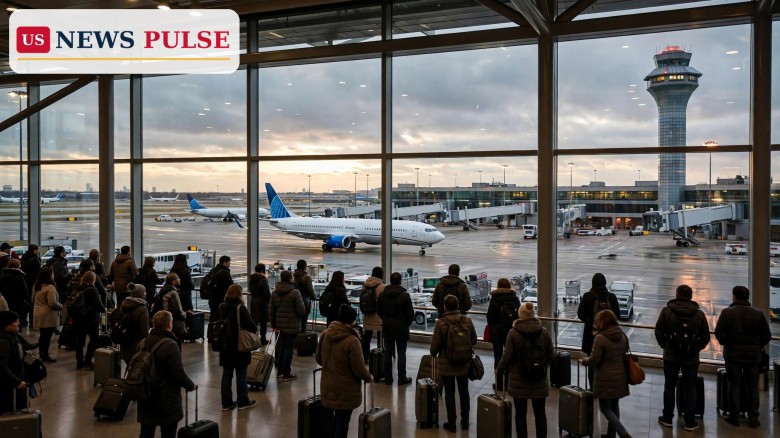
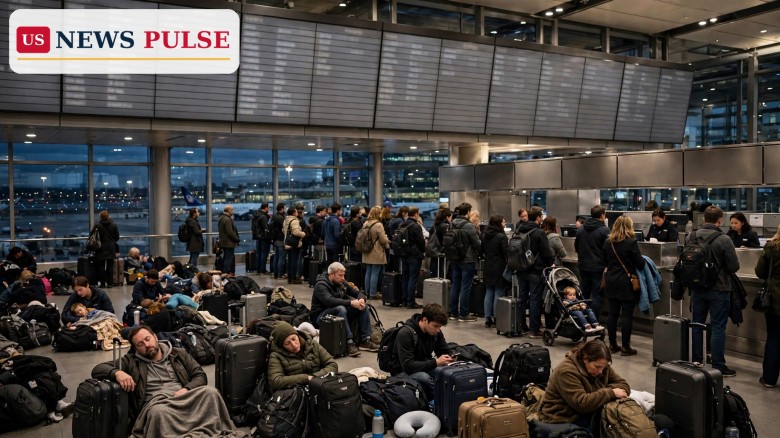
Chicago — The Federal Aviation Administration halted flights into Chicago O'Hare International Airport on Monday morning, grounding departures bound for America's busiest airport for about 90 minutes at the start of the busiest travel week of the year. The Chicago O'Hare ground stop, ordered over staffing constraints at the Chicago Terminal Radar Approach Control facility, known as TRACON, ran from about 10:40 a.m. until about 12:15 p.m. local time before the FAA lifted it. It left 292 flights delayed and 12 cancelled at O'Hare over 24 hours, a warning sign for a Thanksgiving week in which nearly six million Americans are expected to fly.
Key Points
- The FAA ordered a ground stop at Chicago O'Hare at about 10:40 a.m. on Monday, November 23, 2026, holding O'Hare-bound departures nationwide over staffing constraints at Chicago TRACON.
- The stop lasted about 90 minutes, ending at about 12:15 p.m. CT, but O'Hare still recorded 292 delayed flights and 12 cancellations in 24 hours.
- Inbound delays were forecast to average 48 minutes and reach 82 minutes, while departures from O'Hare averaged about 15 minutes of delay.
- Nearly six million Americans are expected to fly for Thanksgiving, up around 7 percent on last year, with more than one million passengers forecast through O'Hare.
- Chicago TRACON has 77 controllers against a target of 102, according to Senators Dick Durbin and Tammy Duckworth of Illinois.
What Happened
The ground stop took effect shortly before 11 a.m. Chicago time on Monday, as the Thanksgiving travel rush was building. Under a ground stop, aircraft bound for the affected airport are held at their departure airports instead of taking off and circling in holding patterns — a safety tool used when an airport or its air traffic facility cannot safely handle the normal flow of arrivals.
In a statement to Fox Chicago, the FAA said: "The FAA is briefly pausing flights into Chicago O'Hare International Airport due to staffing constraints at Chicago Terminal Radar Approach Control (TRACON)." By early afternoon the stop had been lifted and the FAA said operations were normal. The disruption was brief, but its footprint was wide: O'Hare is the main hub for United Airlines, which alone expected nearly 640,000 departing passengers there between November 19 and December 1, up 5 percent on last year.
Background: A System Already Under Strain
Monday's stop was the third aviation disruption in ten days. On Friday, November 13, a telecommunications failure disrupted air traffic control systems across the country, forcing the FAA to halt all flights nationwide for more than four hours — only the third nationwide ground stop in United States history, after September 11, 2001 and the NOTAM failure of January 2023. Around 12,462 flights were cancelled that day.
Then on Sunday, November 22, a technical failure at Delta Air Lines delayed more than 1,000 flights, after its automated weight-and-balance system malfunctioned and forced staff to use manual procedures. The White House has responded with a "Tiger Team" of FAA, transport, defence and intelligence officials to keep the air traffic system running through Thanksgiving, and it is pressing Congress for $50.1 billion to modernise the ageing system.
Chicago O'Hare Ground Stop: The Staffing Gap Behind the Halt
At the heart of Monday's disruption is a staffing shortfall years in the making. Chicago TRACON, the radar facility guiding aircraft across the Chicago area, has 77 controllers against a target of 102, according to Senators Dick Durbin and Tammy Duckworth — roughly three quarters of its intended strength, with little slack when controllers are sick.
Training a fully certified controller takes years, and recruitment has struggled to keep pace with retirements. Facilities such as Chicago TRACON, which handles some of the most complex traffic in the country, are among the hardest to staff. The timing could hardly have been worse: the stop came on the Monday of Thanksgiving week, when airports are already near capacity.
Reactions and Quotes
The FAA's statement was brief, confirming only the cause and scope of the pause. The agency said operations were normal after the lift and announced no further measures. Airlines worked through the afternoon to rebook passengers, with delays at O'Hare easing as the day went on.
The staffing figures cited by Senators Durbin and Duckworth have put the spotlight back on the controller shortage. Illinois's senators have pressed the FAA for years to bring Chicago's facilities up to full strength, and Monday's stop gave their argument a fresh example. For travellers, the advice was practical: check flight status before leaving for the airport and allow extra time.
Why It Matters
O'Hare is not just another airport. It is one of the busiest in the world and a linchpin of the national air network, handling more than one million passengers in Thanksgiving week. When arrivals there stop, even briefly, the effects reach Atlanta, Denver, Dallas and New York, because aircraft and crews meant to fly onward from Chicago are suddenly in the wrong place.
The stop also matters for what it reveals. The November 13 nationwide stop was blamed on a faulty router; the Delta failure was a software problem. Monday's stop was different: it was caused by people, or rather by the shortage of them. A system that can halt at its busiest hub over a staffing shortfall on an ordinary Monday morning has a structural problem, not just a run of bad luck.
What Happens Next
The immediate test comes in the days ahead. Thanksgiving week peaks on Wednesday, when millions fly to be with family, and again on Sunday, when they fly home. The FAA, the airlines and the White House Tiger Team will watch O'Hare closely, hoping Monday's stop was an isolated incident rather than a preview. Travellers can reduce the risk by checking flight status before heading to the airport and arriving earlier than usual.
Frequently Asked Questions
What is a ground stop?
An FAA order holding aircraft bound for a specific airport on the ground at their departure airports, used when the destination airport or its air traffic facility cannot safely accept arrivals.
How long did the O'Hare ground stop last?
About 90 minutes. The FAA ordered the stop at about 10:40 a.m. local time on Monday, November 23, 2026, and lifted it at about 12:15 p.m. CT.
How many flights were affected?
O'Hare recorded 292 delayed flights and 12 cancellations over 24 hours. Inbound delays were forecast to average 48 minutes and reach 82 minutes, while departures averaged about 15 minutes of delay.
Why did the FAA order the stop?
Staffing constraints at Chicago Terminal Radar Approach Control (TRACON), which guides flights in the Chicago area. It has 77 controllers against a target of 102, according to Senators Dick Durbin and Tammy Duckworth.
Will Thanksgiving travel be affected?
Monday's stop was lifted the same day, but it came at the start of Thanksgiving week, when nearly six million Americans are expected to fly. Travellers should check flight status and allow extra time.
Read more: FAA Nationwide Ground Stop Halts All US Flights for Four Hours in Rare Outage; Delta Weight-and-Balance Failure Delays 3,500 Flights Before Thanksgiving; White House Tiger Team Races to Stop Air Traffic Outages Before Thanksgiving.

The US News Pulse newsroom covers breaking news across the United States and the world, working from wire services, official statements and on-the-record sources. Every story is reviewed against our editorial standards before publication. Corrections and tips: info@usnewspulse.com
About our newsroomLeave a Comment