

 | Today's Date:




FAA Ground Stop Hits Chicago O'Hare Again in Equipment Outage on Busiest Travel Day
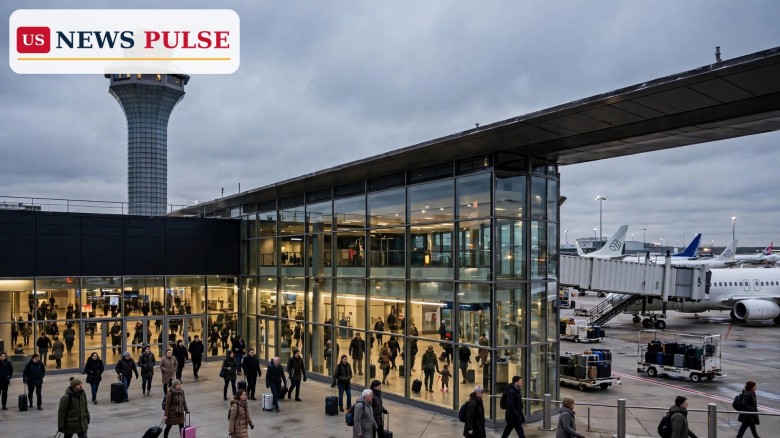
Chicago — The Federal Aviation Administration halted flights into Chicago O'Hare International Airport on Tuesday afternoon, holding O'Hare-bound departures at their origin airports after an equipment outage knocked out part of the airport's ground surveillance radar. The FAA ground stop O'Hare order began at about 3:06 p.m. local time and was expected to run until at least 4:15 p.m., striking on the busiest single day of the Thanksgiving travel period, when roughly 52,000 flights were scheduled across the United States. About 245 flights — 9 per cent of the schedule at the American and United hub — were delayed, the second disruption at O'Hare in as many days.
Key Points
- The FAA issued a ground stop at Chicago O'Hare at about 3:06 p.m. CT on Tuesday, November 24, 2026, citing an equipment outage.
- A fault hit the ground surveillance radar, leaving surface radar over some runways out of service.
- O'Hare-bound flights were held at departure airports, including services from Minneapolis, Milwaukee, Green Bay and Des Moines.
- About 245 flights — 9 per cent of O'Hare's schedule — were delayed; airborne flights faced delays of 15 minutes or less.
- It is the third ground stop at O'Hare since November 13, and the second caused by an equipment outage.
What Happened
The FAA's advisory went out on Tuesday afternoon, ordering a ground stop for flights heading to O'Hare and holding them at their departure airports. The stop covered aircraft under the Chicago and Minneapolis air traffic control centres, including inbound services from Minneapolis, Milwaukee, Green Bay and Des Moines. The cause was a fault in the ground surveillance radar: the surface radar covering some runways was not working, and technicians were making repairs. The FAA said affected flights would be held until at least 4:15 p.m. local time. Flights already in the air faced arrival delays of 15 minutes or less, and the advisory did not specify what equipment was affected.
Tuesday was the busiest single day for US air travel in the Thanksgiving period, with roughly 52,000 flights scheduled nationwide. AAA projects 5.96 million travellers will fly domestic over Thanksgiving, down 0.2 per cent, and more than 1 million passengers were forecast through O'Hare alone.
Background: A Troubled Month for US Aviation
Tuesday's stop came barely a day after a different failure halted flights into the same airport. On Monday morning, the FAA ordered a ground stop at O'Hare at about 10:40 a.m. over staffing constraints at Chicago TRACON. It ran about 90 minutes, was lifted by 12:15 p.m. CT, and left 292 flights delayed and 12 cancelled. Chicago TRACON has 77 controllers against a target of 102, according to Senators Dick Durbin and Tammy Duckworth.
On Friday, November 13, a nationwide ground stop halted nearly all departures for about four hours after a communications outage, delaying more than 10,000 flights and cancelling more than 5,000. Transportation Secretary Sean Duffy blamed contractor work and a faulty router and called for $50 billion to upgrade air traffic control: "This is an emergency." On November 22, a Delta weight-and-balance failure delayed more than 1,000 flights.
FAA Ground Stop O'Hare: Why a Radar Fault Grounds Planes
Ground surveillance radar, also called surface movement radar, is how controllers track aircraft and vehicles on runways and taxiways. It is the picture that lets a tower clear a jet to land while another taxis across its path. When part of that picture goes dark, controllers cannot be sure a runway is clear, so the safe answer is to stop new arrivals.
That is why a partial outage still forces a stop. The fault affected the surface radar covering some of O'Hare's runways, but a controller working a runway without radar cover cannot safely accept arrivals on it. Holding departures at their origin airports is the standard response: it keeps aircraft on the ground and lets the airport recover quickly once the system is restored.
Reactions
The FAA's advisory was terse, as ground-stop notices usually are. It said affected O'Hare-bound flights "would be held at their departure airports until at least 4:15 p.m.", and advised travellers to check with their airlines. The notice gave no detail on the equipment involved, and the agency had not named a root cause by the time the stop was due to end.
The contrast with Monday was the story of the day. Monday's stop was a staffing failure at TRACON; Tuesday's was an equipment failure on the airfield. Two different systems failed at the same airport on consecutive days, at the start of the busiest travel week of the year.
Why It Matters
O'Hare is one of the busiest airports in the world and a hub for American and United, so a stop there ripples across the national network. A delayed departure from Minneapolis or Milwaukee becomes a missed connection in Chicago, and a missed connection on the busiest travel day of the year is hard to rebook. The roughly 245 delays were modest beside the thousands seen on November 13, but they landed on a day with no slack to give.
The pattern matters more than the count. Three ground stops at O'Hare since November 13, two of them equipment outages, suggest the airport's problems are not a single bad day. The November 13 stop exposed ageing communications equipment; Tuesday exposed ageing ground radar — just as the Thanksgiving return peak approaches on Sunday, November 29.
What Happens Next
Technicians were working on the radar fault while the stop was in force, and the FAA was expected to lift it once the surface radar covering the affected runways was restored. Travellers flying through O'Hare on Tuesday evening were advised to check with their airlines.
The wider test comes at the weekend. Thanksgiving falls on Thursday, November 26, and the return peak on Sunday, November 29 is traditionally the busiest flying day of the year. The FAA and the airlines will be watching whether the radar fault was a one-off failure or a symptom of the same ageing infrastructure behind the November 13 outage.
Frequently Asked Questions
Why did the FAA stop flights into O'Hare on Tuesday?
An equipment outage hit the ground surveillance radar, leaving surface radar over some runways out of service while technicians made repairs.
How long did the ground stop last?
It began at about 3:06 p.m. CT on Tuesday, November 24, 2026, and the FAA said affected flights would be held until at least 4:15 p.m. local time.
How many flights were affected?
About 245 flights — 9 per cent of O'Hare's schedule — were delayed. Flights already in the air faced arrival delays of 15 minutes or less.
How is this different from Monday's O'Hare stop?
Monday's stop was caused by staffing constraints at Chicago TRACON and ran about 90 minutes; Tuesday's was an equipment outage affecting ground radar. See Monday's staffing ground stop at O'Hare and the November 13 nationwide ground stop.
What should travellers do?
Check with your airline before heading to the airport and allow extra time. See also how flight chaos dragged into the Sunday after the November 13 stop.

The US News Pulse newsroom covers breaking news across the United States and the world, working from wire services, official statements and on-the-record sources. Every story is reviewed against our editorial standards before publication. Corrections and tips: info@usnewspulse.com
About our newsroomLeave a Comment