

 | Today's Date:




Zelenskyy Says Trump's Berlin Call on Ukraine Aid 'Didn't Sound Like a Threat'
KYIV — Ukrainian President Volodymyr Zelenskyy on Saturday played down President Donald Trump's phone call to European leaders about military aid to Ukraine, saying his words "didn't sound like a threat" — and used the same appearance to offer direct talks with Russian President Vladimir Putin at next month's G20 summit in Miami.
The row had threatened a rift between Kyiv and Washington. Zelenskyy's calm response sought to close it before it widened.
Key Points
- Zelenskyy said Trump told European leaders they were spending a lot on the war and could spend the money at home once a peace deal was reached.
- Trump phoned into the Coalition of the Willing meeting in Berlin on Thursday, hours after his first trilateral meeting with Putin and Xi Jinping.
- Zelenskyy said he is ready to attend the G20 in Miami next month and hold direct talks with Putin there.
- Ukraine faces a projected 70 billion euro funding gap for 2027; the European Commission has proposed covering 45 billion euros of it.
- Britain, France and Germany reaffirmed they will keep supporting Kyiv, pledging 70 billion euros in 2026 and at least the same in 2027.
What Happened
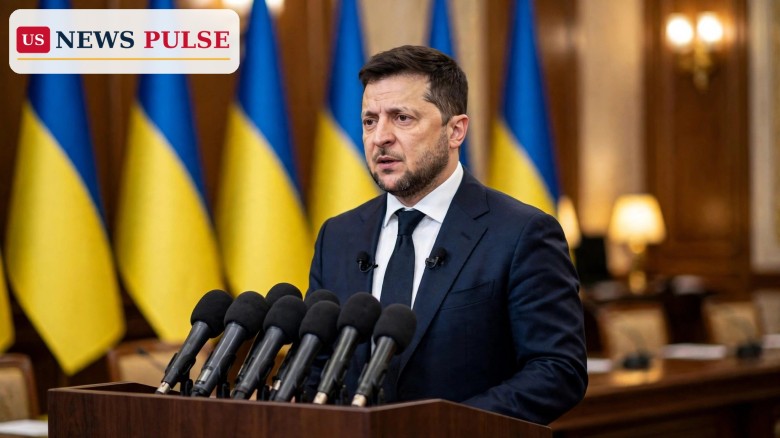
Zelenskyy spoke to reporters in Kyiv on Saturday, November 21, before talks with British Defence Secretary Wes Streeting. Asked about Trump's intervention on the Berlin call, he described what the American president had said: that the European leaders were spending a lot on the war in Ukraine and could spend the money at home once a peace deal was reached.
"It didn't sound like a threat," Zelenskyy said. His wording was careful: he neither endorsed Trump's argument nor attacked it, treating the call as a statement of the president's long-held view that the war should end quickly.
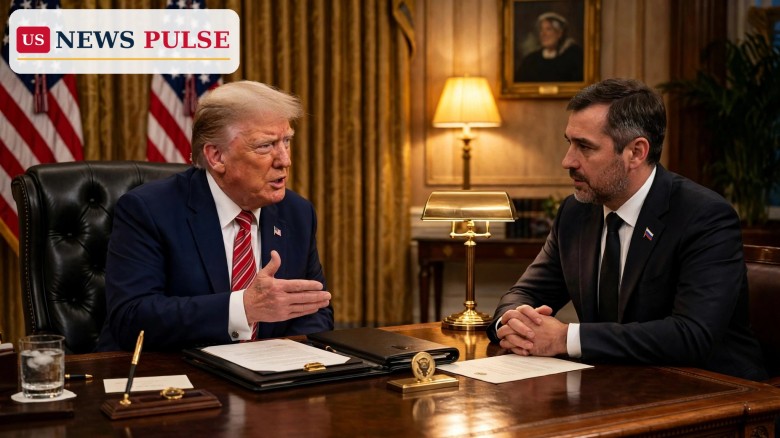
The call took place on Thursday, November 19. Trump phoned into the Berlin meeting from Air Force One, hours after the first-ever trilateral meeting between Trump, Putin and Xi in Shenzhen. Citing four European officials briefed on the discussion, Politico reported that Trump questioned why European countries keep spending billions on military aid and said Putin was serious about peace negotiations. A US official pushed back, calling the reports inaccurate and saying Trump was restating his longstanding desire to end the war.
Background: The Berlin Call and a 70 Billion Euro Gap
The row over aid comes as the money question has become the central issue in the Ukraine war. Ukraine faces a projected funding gap of 70 billion euros for 2027, and the European Commission has proposed covering 45 billion euros of it.
The Berlin meeting was one of the most consequential gatherings of the war's diplomatic season. US envoys Jared Kushner and Steve Witkoff were in the German capital reassuring nearly 40 European leaders after the Shenzhen trilateral, and Kushner said Russia was "comfortable" with NATO-style Article 5 security guarantees for a postwar Ukraine. Kushner later said Russia had agreed to a multilateral format including European countries.
Zelenskyy, Trump and Ukraine Aid: Reading the Call
Zelenskyy's response on Saturday was the work of a leader who has learned that a public argument with Donald Trump rarely helps Kyiv. His answer acknowledged what Trump said, refused to treat it as a threat, and pivoted to his own offer: direct talks with Putin at the G20 in Miami.
That offer matters. Zelenskyy has repeatedly said he is willing to meet Putin face to face, and the G20 summit in Miami next month gives him a concrete stage for it. By pairing his calm reading of the Berlin call with a fresh push for a leaders' meeting, he turned a story about a possible rift into a story about a possible negotiation.
The tone differed sharply from Zelenskyy's language about Putin himself: a day earlier, in a CNN interview, he had called the Russian leader a "killer" after Trump greeted Putin as his "friend" at the Shenzhen summit. Zelenskyy warned then that calling Putin a friend means he "doesn't feel that he is a killer, he doesn't feel enough pressure". With Trump, by contrast, Zelenskyy chose restraint — no accident, since Ukraine depends on the United States for weapons, intelligence and diplomatic backing.
Reactions
European leaders moved quickly to steady the picture after the Berlin call. Britain, France and Germany reaffirmed that they will keep supporting Kyiv, with their pledge of 70 billion euros in 2026 and at least the same in 2027 standing as the clearest answer to Trump's challenge. The message from the three capitals was that European support does not depend on Washington's mood in any single week.
The US official who disputed the Politico account said Trump was restating his longstanding desire to end the war. Zelenskyy's meeting with Wes Streeting underlined the practical side: Britain has been one of Ukraine's most consistent backers, and the defence secretary's Kyiv visit came as London announced fresh military support.
Why It Matters
The aid question is now the hinge on which the war's next phase turns. If European funding holds and American support continues, Ukraine can keep fighting through 2027 while negotiations proceed. If either falters, Kyiv's bargaining position weakens sharply, and Moscow gains an incentive to wait.
Zelenskyy's G20 offer adds a new element: a direct meeting with Putin in Miami would be the first face-to-face encounter between the two leaders since the full-scale invasion began. Trump has set a fast timetable: the Financial Times reported that his administration wants Kyiv to reach a peace agreement by early January, before Democrats take control of Congress.
What Happens Next
Attention now turns to the G20 summit in Miami next month, where Zelenskyy says he is ready to meet Putin directly. Whether it happens will depend on Moscow's response and on the negotiating track in Abu Dhabi and Berlin. In the meantime, European governments will work on closing Ukraine's 70 billion euro funding gap for 2027, starting from the European Commission's 45 billion euro proposal.
Frequently Asked Questions
What did Trump say on the Berlin call? According to four European officials cited by Politico, Trump questioned why European countries keep spending billions on military aid and said Putin was serious about peace talks. A US official called the reports inaccurate.
What did Zelenskyy say in response? Speaking in Kyiv on Saturday, Zelenskyy said Trump told the European leaders they were spending a lot on the war and could spend the money at home once a peace deal was reached. "It didn't sound like a threat," he said.
Is Zelenskyy willing to meet Putin? Yes. He reiterated on Saturday that he is ready to attend the G20 in Miami next month and would hold direct talks with Putin there.
How big is Ukraine's funding gap? Ukraine faces a projected 70 billion euro funding gap for 2027. The European Commission has proposed covering 45 billion euros of it, and Britain, France and Germany have pledged 70 billion euros in 2026 and at least the same in 2027.
Will Europe keep funding Ukraine? The leaders of Britain, France and Germany reaffirmed after Trump's call that they will keep supporting Kyiv, and the European Commission is working on a plan to cover much of the 2027 gap.

The US News Pulse newsroom covers breaking news across the United States and the world, working from wire services, official statements and on-the-record sources. Every story is reviewed against our editorial standards before publication. Corrections and tips: info@usnewspulse.com
About our newsroomLeave a Comment