


 | Today's Date:



IAEA Warns It Cannot Find Iran's Secret Isfahan Enrichment Plant or Its Uranium
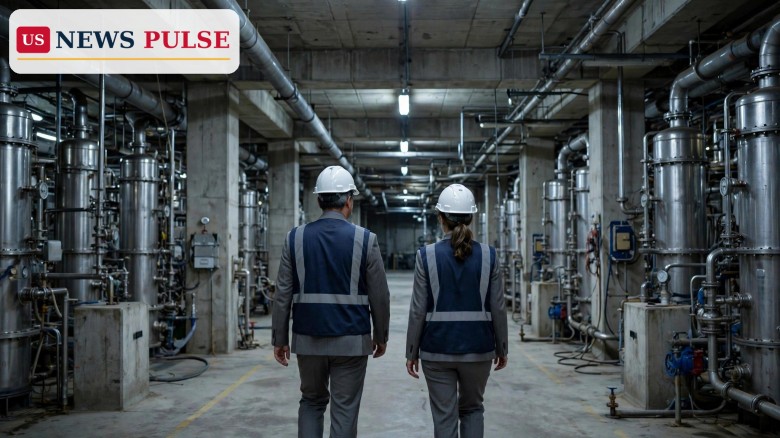
The world's nuclear watchdog has admitted it does not know where Iran's newest underground uranium-enrichment plant is, whether it is operating, or whether it holds nuclear material. The warning, in a confidential report to member states on Friday, November 13, 2026, is the starkest admission yet of how little the International Atomic Energy Agency can now see inside Iran's nuclear programme.
The agency said it is "increasingly concerned" about the Isfahan Fuel Enrichment Plant, known as IFEP, an underground site Iran declared in June 2025 but has never allowed inspectors to visit. With the US-Iran war in its ninth month and diplomacy stalled, the blind spot is now a serious proliferation concern.
Key Points
- The IAEA says it does not know the Isfahan plant's "exact location, status for safeguards purposes, or whether it contains nuclear material".
- Iran declared the underground Isfahan Fuel Enrichment Plant in June 2025 but has never let inspectors inside.
- Director General Rafael Grossi urged Iran to take "incremental steps" to let inspectors back into key facilities, calling access "critical".
- The agency cannot confirm that no nuclear material has been diverted from peaceful activities.
- Inspectors have had no access to Iran's nuclear sites since the June 2025 strikes, except for Bushehr.
What Happened
The International Atomic Energy Agency set out its findings in a confidential quarterly report circulated to member states on Friday, November 13, 2026. Its central warning concerns IFEP, the Isfahan Fuel Enrichment Plant, which Iran declared in June 2025 as a new underground enrichment site.
"The Agency does not know IFEP's exact location, status for safeguards purposes, or whether it contains nuclear material," the report said. It is an unusually blunt statement from an agency that normally measures its language carefully, and it underlines how far verification has collapsed since inspectors were shut out of Iran's nuclear sites.
The agency also said it cannot conclude that no nuclear material has been diverted from peaceful activities. Before the June 2025 strikes, it estimated Iran held 440.9 kilograms of uranium enriched to 60 percent purity, close to weapons-grade. Inspectors have since been unable to verify the stockpile's size, composition or location.
Background: A Programme Hidden From View
Isfahan has long been a centre of Iran's nuclear programme, hosting a nuclear technology centre, a uranium conversion facility and research reactors, and it was among the sites hit in the June 2025 strikes. Iran declared the new underground enrichment plant there that same month but has never given the agency access.
The June 2025 strikes were presented by Washington as having destroyed much of Iran's enrichment capacity. The IAEA's new report does not settle that claim: without access, the agency cannot say what survived, what was rebuilt, or what may have been moved to a site it has never seen.
IAEA: Iran's Hidden Isfahan Plant Raises Nuclear Fears
The Isfahan plant matters because of what enrichment means. Uranium enriched to low levels fuels civilian power reactors; at 60 percent purity, the level Iran had reached before the strikes, the material is a short technical step from the 90 percent used in a weapon. A plant the watchdog cannot locate, let alone inspect, removes the last check on where that line is drawn.
The report's language on diversion is the part that will worry governments most. Under its safeguards agreements, Iran must declare nuclear material and allow the agency to verify it. When the agency says it cannot conclude that no material has been diverted, it is saying the system designed to catch a weapons programme early is no longer working in Iran.
Reactions and Quotes
Director General Rafael Grossi urged Tehran to take "incremental steps" to let inspectors back into key facilities, saying access is "critical" and could pave the way to normal safeguards — small, agreed steps that rebuild confidence rather than a single sweeping deal.
Iran has not publicly responded to the report's findings. Tehran has long insisted its nuclear programme is peaceful and has accused the agency of bias, while arguing that the June 2025 strikes made cooperation impossible. The report itself offers no evidence that Iran has built a weapon, and no claim that the Isfahan plant is operating; its point is that the agency cannot know either way.
Why It Matters
The report changes the debate about Iran's nuclear programme from what Iran has done to what nobody can prove it has not done. For the United States and its allies, an uninspected enrichment plant in a country at war with Washington is a worst-case unknown, and it strengthens the hand of those who argue that only pressure, or force, can settle the question.
For diplomacy, the finding cuts both ways. It gives negotiators a concrete first demand, restoring inspector access, that is far narrower than the sweeping settlements that have failed before. But it also shows how far the starting point has moved: even if talks resume, the agency would be rebuilding its picture of Iran's programme from scratch, with a 440.9-kilogram stockpile of 60-percent uranium unaccounted for and a plant it has never seen.
What Happens Next
The report will be debated by the IAEA's board of governors, which can pass resolutions demanding access and can refer Iran to the United Nations Security Council. Western governments are likely to press for a formal censure, while Russia and China, which have resisted tougher action, may argue for more time.
Watch for three things: whether Iran offers any access, even a single inspection visit; whether the United States uses the report to justify further military action, after Trump said he would strike Iran again "without hesitation"; and whether the next quarterly report shows any improvement.
Frequently Asked Questions
What is the Isfahan Fuel Enrichment Plant?
IFEP is an underground uranium-enrichment plant at Isfahan, declared by Tehran in June 2025. The IAEA has never inspected it and does not know its exact location or whether it holds nuclear material.
How much enriched uranium did Iran hold before the strikes?
Before the June 2025 strikes, the IAEA estimated Iran held 440.9 kilograms of uranium enriched to 60 percent purity, close to weapons-grade. Inspectors have not verified the stockpile since.
Why can the IAEA not inspect Iran's nuclear sites?
The agency has had no access to Iran's nuclear facilities since the June 2025 strikes, except for Bushehr. Iran declared the Isfahan plant in June 2025 but has never let inspectors inside.
Does the report say Iran is building a nuclear weapon?
No. It says the agency cannot conclude that no nuclear material has been diverted from peaceful activities. That is a statement about what the agency cannot verify, not an accusation that a weapon is being built.
What is Rafael Grossi asking Iran to do?
He urged Iran to take "incremental steps" to let inspectors back into key facilities, saying access is "critical" and could pave the way to normal safeguards.
Related coverage: Trump: Iran regime still in power at end of his term would be a defeat; Trump: US doesn't need a deal with Iran, pulls Vance; Iran claims US Bahrain radar strike after Sirik attack.
Leave a Comment