

 | Today's Date:




Magnitude 6.7 Earthquake Shakes Peru's Andes, Felt in Lima - US News Pulse
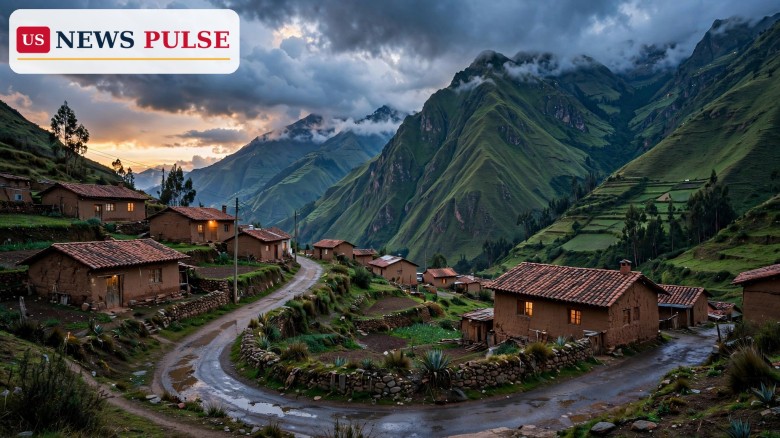
A powerful magnitude 6.7 earthquake shook the Andes in central Peru on Friday evening, rattling buildings in Lima and sending residents into the streets, yet officials reported no deaths and no serious damage. The quake struck at 7:09 p.m. local time on November 20, 2026, with its epicentre about 34 kilometres north of Junín, according to the United States Geological Survey (USGS). Peru's Geophysical Institute said no damage or casualties had been reported, and the mayor of Carhuamayo, the nearest town, told local television there were no reports of victims or material damage.
Key Points
- A magnitude 6.7 earthquake struck the Andes in central Peru at 7:09 p.m. local time on Friday, November 20, 2026, the US Geological Survey said.
- The epicentre was about 34 kilometres north of Junín, at a depth of 108 kilometres according to the USGS; Peru's Defence Ministry put the depth at 129 kilometres.
- The tremor was felt in Lima and in the regions of Ancash, Ica, Ucayali, Cerro de Pasco, Huánuco and Callao, with moderate to strong shaking reported.
- No deaths and no serious damage were reported in preliminary assessments, with only minor damage to homes, power cuts and landslides, including a fallen tree in Junín.
- Peru sits on the Pacific Ring of Fire; a 5.5-magnitude quake in the Junín region in July killed six people.
What Happened
The earthquake struck on Friday evening and was strong enough to be felt clearly in Lima, where residents rushed out of buildings and into the streets. The USGS placed the epicentre in the Andes, 34 kilometres north of the highland city of Junín, and measured the depth at 108 kilometres; Peru's Defence Ministry gave a deeper figure of 129 kilometres.
Peru's National Emergency Operation Center said the shaking reached moderate to strong intensity across a broad area, including Lima and the regions of Ancash, Ica, Ucayali, Cerro de Pasco, Huánuco and Callao. Near the epicentre, the quake caused minor damage to homes, power cuts and landslides, including a fallen tree in Junín. Even so, the first official checks found no deaths, no serious injuries and no major destruction.
Background and Context
Peru is one of the most seismically active countries in the world. It lies along the Pacific Ring of Fire, a 40,000-kilometre arc of volcanoes and fault lines around the Pacific Basin where most of the world's earthquakes occur. Off Peru's coast, the Nazca tectonic plate dives beneath the South American plate, a slow collision that stores up enormous strain and releases it in earthquakes. Building codes, school drills and emergency planning all reflect a population that knows the ground can move without warning.
It is not the first strong tremor to hit the Junín region this year. In August, a 6.7-magnitude earthquake in the Peruvian Andes left two people injured and damaged several homes, health centres and schools. A month earlier, in July, a 5.5-magnitude quake in the region killed six people and injured 30. Friday's earthquake was as powerful as the August tremor, yet its much greater depth appears to have spared the region a repeat of that damage.
Peru Earthquake: A Deep Tremor Beneath the Andes
The defining feature of this Peru earthquake is its depth. At 108 kilometres below the surface, the rupture happened far deeper than the shallow quakes that typically cause the worst destruction. Seismic energy weakens as it travels upward through rock, so by the time the shaking reached towns and cities it was strong enough to be felt over a huge area, but not strong enough at any one place to bring buildings down. That is why a magnitude 6.7 quake, a size that can devastate a city when it strikes close to the surface, left Peru counting fallen trees and power cuts rather than casualties.
Depth also explains the quake's wide footprint: deep earthquakes are often felt hundreds of kilometres from their epicentre, and Friday's tremor shook the capital and six other regions. In Lima, where high-rise buildings can sway noticeably even in distant quakes, residents poured into the streets as a precaution, a familiar drill in a city that has lived through major earthquakes before.
Reactions and Quotes
Peru's Geophysical Institute moved quickly to reassure the public, saying no damage or casualties had been reported. The mayor of Carhuamayo, Abdel Vega, told a local television station there were no reports of victims or material damage in his area. Peru's Defence Ministry confirmed the quake's scale and its own depth reading of 129 kilometres, while the National Emergency Operation Center reported moderate to strong shaking across the affected regions. In Lima, residents left buildings and waited in the streets, as they are taught to do, before returning inside once the shaking stopped. No tsunami warning was issued: the epicentre lay deep inland in the Andes, far from the sea.
Why It Matters
The most important fact about this earthquake is what did not happen. A magnitude 6.7 tremor in a populated region could easily have killed people, as the six deaths in the Junín region in July showed. That Friday's quake caused no reported deaths is largely a matter of geology, the depth of the rupture, but also a reminder of why Peru invests in monitoring, building standards and public drills. The Geophysical Institute's network detected and located the quake within minutes. It also matters where it struck: Junín and the surrounding highlands are home to rural communities linked by mountain roads that landslides can close for days, and even minor damage can leave isolated villages without light or communications.
What Happens Next
Authorities will continue damage surveys in the coming days, checking homes, schools and health centres in the highlands around Junín and clearing roads blocked by landslides. Power crews will restore electricity where lines came down, and seismologists will watch for aftershocks, which can damage buildings already weakened by the main shock. Residents have been urged to stay alert, keep emergency supplies ready and follow official guidance if further shaking occurs. Fuller assessments are expected once reports arrive from the more remote communities near the epicentre.
Frequently Asked Questions
Where did the Peru earthquake strike?
The epicentre was in the Andes in central Peru, about 34 kilometres north of Junín, according to the US Geological Survey.
How strong was the earthquake?
It measured magnitude 6.7, at a depth of 108 kilometres according to the USGS. Peru's Defence Ministry put the depth at 129 kilometres.
Was anyone killed or hurt?
No deaths or serious injuries were reported. Officials reported only minor damage to homes, power disruptions and landslides.
Was a tsunami warning issued?
No. The epicentre was deep inland in the Andes, far from the coast, so no tsunami warning was issued.
Why does Peru get so many earthquakes?
Peru sits on the Pacific Ring of Fire, where the Nazca tectonic plate dives beneath the South American plate. That collision makes the country one of the most earthquake-prone on Earth.
Read more: Japan earthquake: magnitude 5.7 quake strikes central Japan, injuring at least 20 in Aichi | Japan earthquake: magnitude 6.1 quake strikes off Tokyo coast, no tsunami warning | Pope Leo XIV begins first Latin America trip weeks after lung cancer surgery

The US News Pulse newsroom covers breaking news across the United States and the world, working from wire services, official statements and on-the-record sources. Every story is reviewed against our editorial standards before publication. Corrections and tips: info@usnewspulse.com
About our newsroomLeave a Comment