


 | Today's Date:





SpaceX Starship Flight 15 to Attempt First-Ever Land Catch of Upper Stage
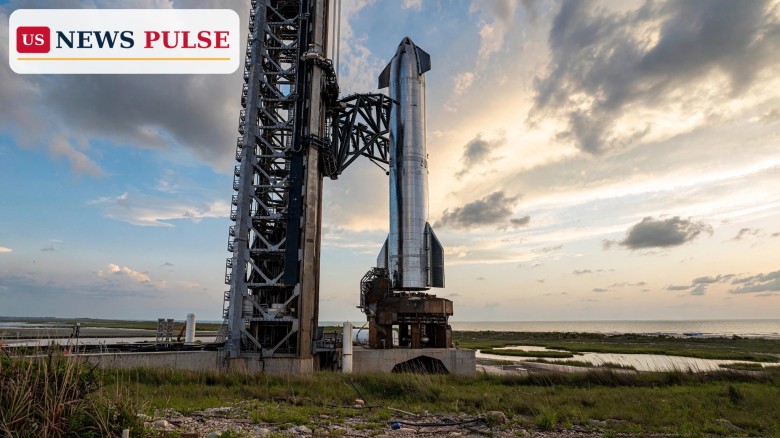
SpaceX is about to try something no rocket company has ever done. Starship Flight 15 is scheduled to lift off at 4:45 p.m. CT on Friday, November 13, from Starbase in South Texas, and for the first time the plan is to bring the giant upper stage back to land and catch it at the launch site instead of letting it fall into the ocean. If it works, it would be the biggest step yet toward a fully reusable rocket.
Key Points
- Starship Flight 15 launches at 4:45 p.m. CT (2245 GMT) on Friday, November 13, 2026, from Starbase in South Texas.
- First attempt to catch the Starship upper stage on land, about 22 hours after launch, after 14 orbits.
- The Super Heavy booster will also return to Texas for a tower catch.
- It is the second Starship flight to carry operational Starlink satellites.
- As of Friday morning, SpaceX had not yet received its launch licence from the Federal Aviation Administration.
What Happened
SpaceX confirmed the plan for its 15th Starship flight on Friday, with the 407-foot-tall rocket set to carry a batch of operational Starlink satellites — only the second time a Starship mission has flown paying satellite cargo. The flight is both a working mission for the satellite internet business and the most ambitious test the rocket has attempted.
The centrepiece is the return. After the Super Heavy booster separates and flies back to the launch tower, the Starship upper stage will keep flying, circle the Earth 14 times, then come home, with the first-ever Starship catch set for around 2:45 p.m. CT on Saturday. The booster must first be moved off the launch pad to clear the way. One item was still open on Friday morning: SpaceX had not yet received its FAA launch licence, Reuters reported, although the agency typically issues licences a day before past launches.
Background: The Road to Flight 15
Starship has flown 14 times since its first test in April 2023. The programme's biggest success so far has been the booster catch: SpaceX has caught the 236-foot Super Heavy booster three times, guiding it back into the launch tower's mechanical arms about 10 minutes after liftoff, most recently in March 2025. The upper stage has proved harder. On the last flight in September, Starship reached orbit for the first time, though some engines shut down; the mission ended after roughly three hours with an intact Pacific splashdown. Flight 15 is the first attempt to bring the spacecraft itself back to land.
The stakes go well beyond one test flight. NASA has given SpaceX about $3.2 billion since 2021 to develop Starship as the lander that will return astronauts to the Moon under the Artemis programme, and SpaceX has put at least $15 billion of its own money into the rocket. A crewed Moon landing is targeted for 2028, though orbital fuel transfers between Starship tankers remain unproven.
Starship Flight 15: How the First Land Catch Will Work
The catch will look familiar to anyone who has watched a booster return: the upper stage will fall back toward Texas, flip upright, slow with its engines and settle into the tower's mechanical arms, the same system that has caught the booster three times. The difference is the vehicle: the upper stage is the spacecraft itself, returning after a full day in orbit rather than a 10-minute hop. SpaceX has said it would be a "breakthrough moment in making Starship a reliable, rapidly reusable rocket" if all goes as planned.
Reusability is the whole point of the design. Every other orbital rocket in history has thrown away its upper stage; catching Starship would mean the entire vehicle could fly again, which is what makes Musk's vision of cheap, frequent spaceflight possible. The mission also matters for Starlink: Starship is the rocket SpaceX needs to launch its next generation of satellites at scale, and the company sees it as crucial to expanding the network and, in time, to deploying AI data-processing satellites. Musk expects weekly Starship launches by the first half of 2027, and Florida launches could start by the end of 2026.
Reactions and Quotes
SpaceX has framed the flight as a defining test, saying a successful catch would be a "breakthrough moment in making Starship a reliable, rapidly reusable rocket". Musk has been equally direct about the pace he wants, saying he expects a weekly launch cadence by the first half of 2027 — a tempo no rocket of this size has ever sustained.
NASA is watching closely: the agency is counting on Starship to land its astronauts on the Moon, while Jeff Bezos' Blue Origin is also building a Moon lander, Blue Moon, due to join Starship and Orion in Earth orbit next year for Artemis III. NASA recently announced a $10 billion suite of Moon Base contracts, including work that depends on heavy-lift rockets like Starship.
Why It Matters
A successful land catch would change the economics of spaceflight. Today, the upper stage — the part of the rocket that actually reaches orbit — is discarded on every mission, by every operator. Recovering and reflying it would cut launch costs sharply and let SpaceX fly far more often, which its Starlink constellation and Moon plans require.
It would also test Musk's boldest claim: that Starship can become an airline-like vehicle. The booster catches proved half of that vision. The upper stage is the other half — and it must survive re-entry from orbit, the hardest part of the flight. A failure would be a setback, not a surprise: SpaceX treats test flights as experiments and has reflown quickly after past failures.
What Happens Next
All eyes are first on the 4:45 p.m. CT launch window on Friday, and on whether the FAA licence arrives in time. If the rocket lifts off as planned, the booster catch comes about 10 minutes later, and the long wait begins: 14 orbits, roughly 22 hours, before the upper stage attempts its debut catch at about 2:45 p.m. CT on Saturday.
A clean catch would clear the way for more Starlink flights and the orbital refuelling tests NASA needs before a Moon landing. A miss would send engineers back to the data — and probably back to the pad within weeks. SpaceX is also in advanced merger talks with Tesla, a deal that would put the rocket business inside the largest company ever assembled.
Frequently Asked Questions
When does Starship Flight 15 launch?
Friday, November 13, 2026, at 4:45 p.m. CT (2245 GMT) from Starbase in South Texas, licence permitting.
What is new about Flight 15?
It is the first attempt to catch the Starship upper stage on land. SpaceX has caught the Super Heavy booster three times, but never the spacecraft itself.
When is the Starship catch supposed to happen?
About 22 hours after launch, around 2:45 p.m. CT on Saturday, November 14, after 14 orbits.
What is Starship carrying?
A batch of operational Starlink satellites.
Why does the catch matter for the Moon?
NASA has paid SpaceX about $3.2 billion to develop Starship as its Artemis Moon lander for a crewed landing targeted in 2028.
Leave a Comment