


 | Today's Date:





Starship Flight 15 Reaches Orbit as Booster Catch Fails and Super Heavy Explodes
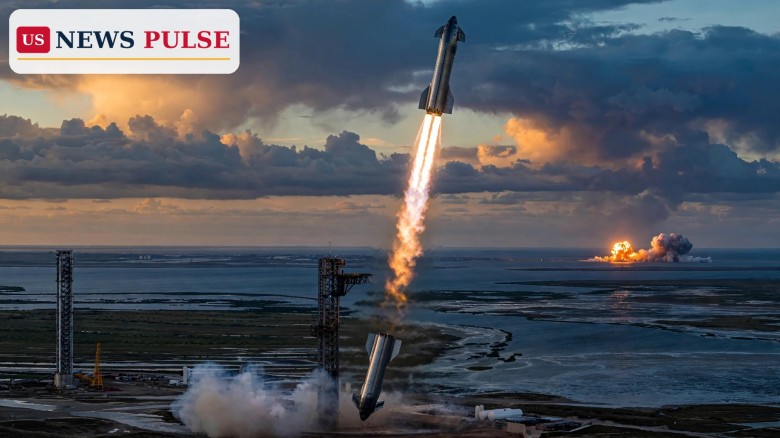
SpaceX's Starship Flight 15 delivered a split verdict on Friday evening: the giant rocket reached orbit, but its planned double catch fell apart within minutes of liftoff. The 407-foot Starship lifted off from Starbase, Texas, at 5:47 p.m. ET on Friday, November 13, 2026, aiming for the first recovery of both stages in one mission. The upper stage made it to space and deployed its satellites. The booster did not come home.
Key Points
- Starship Flight 15 launched at 5:47 p.m. ET on Friday, November 13, 2026, from Starbase, Texas, on its 15th test flight.
- About six and a half minutes after launch, the Super Heavy Booster 22 catch was aborted when safety criteria were not met.
- The booster was diverted offshore and burst into flames and exploded over the Gulf of Mexico moments before splashdown.
- The upper stage, Ship 42, reached low Earth orbit at about 275 kilometres and deployed all 26 Starlink V3 satellites.
- Ship 42 will coast about 22 hours over 14 orbits, with the first upper-stage tower catch attempt set for Saturday.
What Happened
The flight began as planned. The 407-foot (124-metre) stack climbed away from Starbase on schedule, but about six and a half minutes after launch the plan changed. Automated safety criteria for the booster catch were not met, and SpaceX aborted the return. Instead of flying back to the launch tower's mechanical arms, Booster 22 was diverted offshore toward the Gulf of Mexico.
Moments before splashdown, the booster burst into flames and exploded over the water. SpaceX gave no immediate reason for the aborted catch. The loss ends a run of successful booster recoveries and means the first catch of a Version 3 Super Heavy will have to wait.
Above the drama, the rest of the flight went well. Ship 42, the upper stage, ignited all six of its Raptor engines, completed hot-staging and a second engine burn, and reached low Earth orbit at about 275 kilometres. It then deployed all 26 Starlink V3 satellites it was carrying, completing the mission's working cargo job. It was only the second time a Starship has fully reached orbit, after Flight 14, and it proved the redesigned spacecraft can do the job it was built for even when the booster does not come back.
Background: The Road to Flight 15
Starship has flown 15 times since its first test in April 2023, and the programme has been defined by a cycle of spectacular failures followed by rapid fixes. The booster catch was its biggest success so far: SpaceX has caught the 236-foot Super Heavy booster three times, guiding it back into the tower's arms about 10 minutes after liftoff, most recently in March 2025. Friday's attempt would have been the first catch of a Version 3 Super Heavy and the first booster catch in eight months.
The upper stage has proved harder to bring home. On the last flight in September, Starship reached orbit for the first time, though some engines shut down, and the mission ended after roughly three hours with an intact Pacific splashdown.
The stakes go well beyond one test flight. NASA has given SpaceX about $3.2 billion since 2021 to develop Starship as the lander that will return astronauts to the Moon under the Artemis programme, and SpaceX has put at least $15 billion into the rocket. A crewed Moon landing is targeted for 2028. NASA recently announced a $10 billion suite of Moon Base contracts, including work that depends on heavy-lift rockets like Starship.
Starship Flight 15: A Split Result in the Gulf and in Orbit
The aborted catch is a reminder of how narrow the margins are in booster recovery. The tower catch depends on a chain of automated checks: the booster's speed, position and engine health must all fall inside tight limits, and if any one of them does not, the system sends the vehicle to the sea instead.
For the upper stage, the picture is different. Ship 42's clean orbit and satellite deployment show that the spacecraft itself is maturing. Reaching orbit, completing a second engine burn and releasing 26 Starlink satellites is the routine performance SpaceX needs from a working cargo vehicle.
Reactions and Quotes
SpaceX has framed the flight as a defining test, saying a successful catch would be a "breakthrough moment in making Starship a reliable, rapidly reusable rocket". That language now applies to Saturday's attempt rather than Friday's: the upper-stage catch, if it works, would still be the first of its kind.
Elon Musk says he expects a weekly launch cadence by the first half of 2027 — a tempo no rocket of this size has ever sustained. Friday's launch was previewed as the most ambitious Starship test yet, and the outcome — orbit reached, booster lost — is the kind of mixed result the programme has produced before.
Why It Matters
A successful double catch would have changed the economics of spaceflight in a single evening. Today, the upper stage — the part of the rocket that actually reaches orbit — is discarded on every mission, by every operator. Recovering and reflying it would cut launch costs sharply and let SpaceX fly far more often.
Friday's result splits that promise in two. The upper stage proved it can reach orbit and do useful work, The booster, by contrast, failed at a manoeuvre SpaceX had already performed three times, a reminder that reusability is not a solved problem even after it has been demonstrated.
What Happens Next
All eyes are now on Ship 42. The spacecraft is coasting about 22 hours over 14 orbits, with the first upper-stage tower catch attempt set for Saturday, November 14, at about 4:17 p.m. ET, if all systems check out.
A clean catch on Saturday would still make Flight 15 a landmark: the first time a spacecraft has been caught by a tower after a full day in orbit, and the first time Starship has completed a working satellite mission and come home. A miss would send engineers back to the data — and probably back to the pad within weeks.
Frequently Asked Questions
When did Starship Flight 15 launch?
Friday, November 13, 2026, at 5:47 p.m. ET from Starbase, Texas.
What happened to the Super Heavy booster?
The catch of Booster 22 was aborted about six and a half minutes after launch when safety criteria were not met. The booster was diverted offshore and exploded over the Gulf of Mexico moments before splashdown.
Did the upper stage reach orbit?
Yes. Ship 42 ignited all six Raptor engines, reached low Earth orbit at about 275 kilometres — only the second time a Starship has fully reached orbit — and deployed all 26 Starlink V3 satellites.
When is the upper-stage catch attempt?
Saturday, November 14, 2026, at about 4:17 p.m. ET, after about 22 hours and 14 orbits, and only if all systems check out. The fallback is a splashdown in the Gulf or the Pacific.
Why does the catch matter for the Moon?
NASA has paid SpaceX about $3.2 billion to develop Starship as its Artemis Moon lander, and catching the spacecraft is essential to making the rocket fully reusable.
Leave a Comment