

 | Today's Date:




Federal Government Seizes Newark Housing Authority, Removes Entire Board
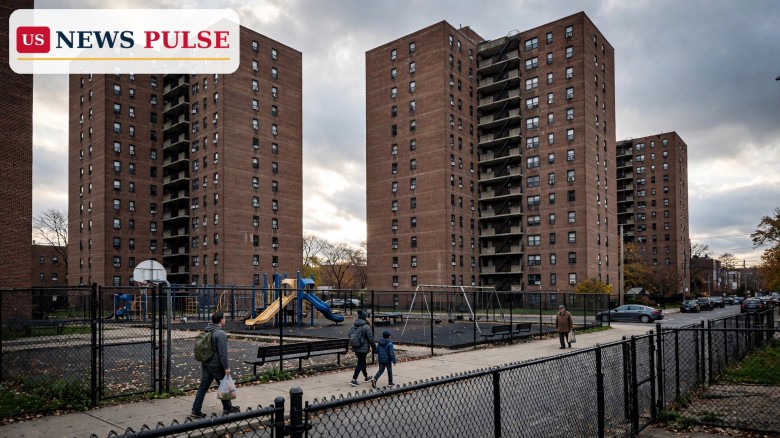
The federal government took control of the Newark Housing Authority on Thursday, November 19, 2026, removing its entire Board of Commissioners after finding the agency had failed occupancy and financial targets under a recovery agreement signed in September 2024. The Newark Housing Authority takeover puts one of New Jersey's largest public housing agencies under direct federal control, with two federal officials holding the board's powers indefinitely. The authority operates 44 housing developments and serves more than 10,000 families.
Key Points
- The federal government took control of the Newark Housing Authority on Thursday, November 19, 2026, removing its entire Board of Commissioners.
- HUD declared the authority in "substantial default" for failing occupancy and financial targets under a recovery agreement signed in September 2024.
- Two federal officials, Shylon Ferry and Daniel Sherrod, now hold the board's powers for the duration of HUD control, with no end date given.
- The authority operates 44 housing developments serving more than 10,000 families; daily operations and resident services continue under federal oversight.
- Ousted commissioner Patrick Council, a Newark city councilwoman, opposes the takeover and warned it could lead toward privatisation.
What Happened
HUD Assistant Secretary Benjamin Hobbs set out the takeover in a letter to Executive Director Leonard Spicer and board chairman Brian Logan, declaring the authority in "substantial default" and writing that "NHA has not taken good faith efforts to substantially improve". The letter ended the board's authority in a single stroke.
HUD first warned the authority on September 22, 2026, that it had missed required occupancy targets under the September 2024 recovery agreement. On November 5 it cited two more problems: failure to improve financial performance and failure to submit required financial information. Together, the three findings formed the basis for the default declaration and the takeover.
The authority challenged the findings in written responses on October 2 and November 13, acknowledging it had fallen short but arguing its performance had improved and a default finding was premature. HUD rejected that argument, and the takeover went ahead.
Background and Context
The recovery agreement signed in September 2024 was meant to pull the authority back from the problems that had put it under federal scrutiny. Such agreements set measurable targets for filling vacant homes, stabilising finances and reporting reliable data, with stronger federal action threatened if they are missed. In Newark, the targets were occupancy and financial performance, and HUD says the authority missed them.
HUD generally prefers corrective plans and monitoring, reserving direct control for agencies it judges unable or unwilling to fix themselves. The Newark decision therefore marks an unusually sharp escalation, and it follows a pattern of harder-line HUD enforcement this year. Read more: Judge Rejects Trump's $4 Billion Homelessness Revamp, Blocks $1.3 Billion Shift.
Newark Housing Authority Takeover: What Federal Control Means
With the board removed, its powers now sit with two federal officials, Shylon Ferry and Daniel Sherrod, for as long as HUD control lasts. No end date has been given, and no timetable for returning the authority to local control has been announced. In practice, the two officials now make the decisions the six-member board used to make, from budgets to policy for the authority's developments.
The ousted commissioners are chairman Brian Logan, City Councilwoman Patrick Council, Vice Chairman Imam Daud-Haqq, Vivian Carter, Ashraf Latif and Linda Washington. Their removal ends local oversight of the agency in one move, leaving it answerable directly to HUD for the first time in its modern history.
For the more than 10,000 families in the authority's 44 developments, the immediate message is continuity: daily operations and resident services continue under federal oversight, and the takeover changes who runs the agency rather than who lives in its homes. Longer-term questions — how quickly vacant homes are filled, how finances are repaired and when local control returns — now rest with Ferry and Sherrod.
Reactions
HUD's position is in Hobbs's letter: the authority had not made good-faith efforts to improve substantially, and the default finding followed months of warnings and missed targets. The department has not announced a timetable, or what benchmarks the authority must meet to regain local control.
The sharpest opposition has come from Councilman Patrick Council, an ally of Mayor Ras Baraka who sat on the board. Council opposes the takeover, saying it was made without sufficient consideration of residents, and warned it could open the way to privatisation — a long-standing fear among public housing advocates that federal takeovers can become a step toward selling off public homes rather than repairing them.
Neither the authority nor its executive director has announced a legal challenge.
Why It Matters
Newark is one of New Jersey's largest cities, and its housing authority is one of the state's biggest providers of affordable homes. More than 10,000 families depend on it, many among the city's poorest. Removing an entire board and taking direct control is not a routine administrative step. It is a judgment that the local agency cannot fix itself, putting thousands of families' homes under direct management from Washington.
The takeover also matters beyond Newark: it signals to every other struggling public housing authority that HUD is willing to remove a board and take over, a message that will be heard well beyond New Jersey by authorities operating under their own recovery agreements.
What Happens Next
The immediate next step is federal management: Ferry and Sherrod hold the board's powers, and staff will report to them while daily operations continue. The first test will be whether occupancy and financial reporting improve, and how quickly, since those were the failures cited in the default declaration.
Residents and city leaders will watch for three things: a HUD plan for filling vacant homes, what the authority must do to return to local control, and any sign of the privatisation Council warned about. None has been published yet, so until HUD sets out its benchmarks, the takeover has no visible end date.
Frequently Asked Questions
What happened to the Newark Housing Authority?
The federal government took control on Thursday, November 19, 2026, removing its entire board after HUD declared it in "substantial default".
Why did HUD take over the authority?
HUD said the authority missed occupancy and financial targets under a September 2024 recovery agreement, and failed to submit required financial information.
Who runs the authority now?
Two federal officials, Shylon Ferry and Daniel Sherrod, hold the board's powers for the duration of HUD control. No end date has been given.
How many people does the authority serve?
It operates 44 housing developments serving more than 10,000 families in Newark, New Jersey.
Will residents be affected?
Daily operations and resident services continue under federal oversight. Ousted commissioner Patrick Council opposes the takeover and warned it could lead toward privatisation.

The US News Pulse newsroom covers breaking news across the United States and the world, working from wire services, official statements and on-the-record sources. Every story is reviewed against our editorial standards before publication. Corrections and tips: info@usnewspulse.com
About our newsroomLeave a Comment