

 | Today's Date:





Excavation Next Door Likely Caused Deadly Brooklyn Building Collapse, NYT Finds
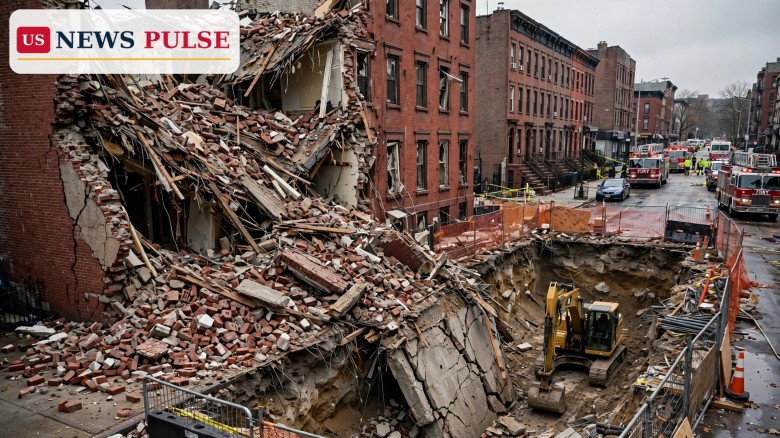
A New York Times investigation has concluded that the excavation dug on the lot next door most likely caused the collapse of a three-storey building in Brooklyn that killed eight people on November 11, 2026 — a finding that shifts the focus from the century-old building itself to the construction work beside it.
Published on Friday, it drew on hundreds of post-collapse photographs, a three-dimensional model of the site and the project's planning documents, all reviewed by structural and geotechnical engineers. Their conclusion is blunt: the digging weakened the foundation of 1321 Flatbush Avenue until it could no longer hold.
Key Points
- A New York Times investigation concludes that excavation on the lot next door most likely caused the collapse of the three-storey building at 1321 Flatbush Avenue in Brooklyn.
- The approved plans lacked underpinning and heavy-duty reinforcement directly alongside the century-old building, engineers found.
- Structural engineer Jane Raba of RA Engineering said that even if the builders had followed the plans precisely, the building would have been in danger.
- The foundation wall beside the dig dropped about 18 inches before breaking apart and leaned as much as 3.5 feet; the collapse tore down a shared wall with the neighbouring building.
- The Brooklyn District Attorney has opened a criminal investigation; the Buildings Department declined to comment.
What Happened
The building at 1321 Flatbush Avenue came down on November 11, 2026, killing eight people — six adults and two children — and injuring at least 18. Firefighters searched the rubble for days. The cause was unknown, and the Buildings Department opened its own review while the District Attorney began a criminal investigation.
The Times investigation now offers the fullest explanation. Reporters gathered hundreds of photographs, built a 3-D model and obtained the neighbouring project's planning documents. Engineers who examined the material concluded the excavation was the most likely cause: the digging removed earth that had supported the old foundation for a century, and the approved plans lacked the underpinning and reinforcement that would normally protect a neighbouring structure.
The foundation wall beside the dig dropped about 18 inches before breaking apart and leaned as much as 3.5 feet, and the falling building tore down a wall shared with the building next door. Read how New York City ordered the demolition of the neighbouring building wrecked by the collapse.
Background and Context
The building that fell was about a century old, a three-storey structure in Flatbush. Older New York buildings often rest on shallow foundations that depend on the surrounding earth, so digging a deep pit beside one without first shoring it up is the risk the city's construction rules are meant to prevent.
The project next door was ambitious: the developer had sought a nine-storey tower on a site approved for three storeys. After the disaster, the Buildings Department began sweeping more than 160 work sites tied to the same project team, centred on 2625 Bedford Avenue. Read how the Brooklyn collapse developer sought a nine-storey tower on a three-storey approval.
The damage did not stop at 1321 Flatbush Avenue. The building at 1323 Flatbush Avenue was so badly wrecked that the city ordered its controlled demolition on November 20, after engineers ruled it too unstable to enter safely. Tenants nearby could not return for their belongings, because of the structural danger and heavy asbestos in the wreckage.
Brooklyn Building Collapse Excavation: What the Engineers Found
The central finding is that the approved plans themselves were not enough. They lacked underpinning — extending and strengthening an existing foundation before digging beside it — and heavy-duty reinforcement alongside 1321 Flatbush Avenue. That omission left the old foundation exposed to the full effect of the dig.
Jane Raba, a structural engineer with RA Engineering, put it starkly: "even if they had followed the plans precisely, the building would have been in danger of collapsing." The danger, in other words, was not only whether the work matched the paperwork. The paperwork itself did not protect the building.
That distinction will matter in the investigations: if the plans were followed, the questions turn to who approved them; if not, to the builders. Either way, the 18-inch drop and 3.5-foot lean are now the hard numbers at the centre of the case.
Reactions and Quotes
The engineering judgment is the sharpest statement so far: Raba's assessment — that the building would have been in danger even if the plans had been followed exactly — is the clearest sign yet that the collapse was foreseeable, not a freak accident.
The official response has been more guarded. The District Attorney has opened a criminal investigation but has not said what charges it is considering. The Buildings Department declined to comment, citing its own review, though it has ordered the demolition of 1323 Flatbush Avenue and swept the project team's other sites.
Earlier reporting had raised questions about oversight: the New York Post reported the city approved construction near the site despite red flags.
Why It Matters
The collapse killed eight people, including two children, and left nearby families unable to return home. A finding that the cause was the excavation next door turns a single disaster into a test of how New York oversees construction beside its oldest buildings.
Thousands of similar century-old buildings stand across the city, many with shallow foundations. If the underpinning rules were not applied or enforced here, how many other sites carry the same risk? That is behind the Buildings Department's sweep of more than 160 sites tied to the same project team. Read how the Brooklyn collapse death toll rose to eight as the search continued.
What Happens Next
The criminal investigation is the most consequential next step. Prosecutors will weigh whether anyone involved — the developer, the builders, or those who approved the plans — bears criminal responsibility. No charges have been announced, and such investigations can take months.
The Buildings Department's review continues, along with its sweep of the project team's other sites. The demolition of 1323 Flatbush Avenue will remove the most damaged structure, but vacate orders on surrounding buildings remain.
For the families of the eight victims, the investigation answers what happened — but not yet who will be held responsible.
Frequently Asked Questions
What caused the Brooklyn building collapse?
A New York Times investigation concludes excavation next door most likely caused the collapse, weakening the century-old foundation of 1321 Flatbush Avenue. The approved plans lacked underpinning and reinforcement.
How many people were killed?
Eight people — six adults and two children — and at least 18 were injured when the three-storey building collapsed on November 11, 2026.
What is underpinning?
Underpinning extends and strengthens an existing foundation before digging beside it. Engineers found the approved plans lacked it.
Who is investigating the collapse?
The Brooklyn District Attorney has opened a criminal investigation, and the Buildings Department is conducting its own review of more than 160 work sites tied to the same project team.
What happened to the building next door?
The building at 1323 Flatbush Avenue was so badly damaged that New York City ordered its controlled demolition on November 20, after engineers ruled it too unstable to enter safely.

The US News Pulse newsroom covers breaking news across the United States and the world, working from wire services, official statements and on-the-record sources. Every story is reviewed against our editorial standards before publication. Corrections and tips: info@usnewspulse.com
About our newsroomLeave a Comment